Monday, October 24, 2016

Candle Magic Superstitions


I enjoy candle magic.  I find it very straight forward and very versatile. I don't hold much with certain superstitions attached to candle magic, however. I've always been of the opinion that the intent and level of respect is what counts. After all, if I blow the candle out, am I "blowing away" and wasting the energy, or am I sending the energy off to do my will upon my breath? Is it more rude to put out the candle with the air element (blowing it out) than it is with the earth element (using a snuffer)? Wouldn't snuffing (earth element) be like grounding, therefore dissipating the energy? See, I can create superstitions, too! :D

In terms of candle health, it's best to re-wax the wick after putting out the candle by dipping the wick into the pool of melted wax after you put it out, so that could be the origin of the superstition that the fire element and/or the spirits will be offended if you blow out the candle.  If the wick is not re-waxed, then it will have no protection from any moisture that gets on the wick, and an even slightly damp wick will have difficulty being re-lit. Even heavy humidity in the air can make a wick difficult to light.

Of course, using a snuffer doesn't automatically re-wax the wick, either. Some people just smash the snuffer down onto the candle, and that can sometimes re-wax it a little, but not much and not always. Others hold the snuffer just above the flame without it touching the wax so that it burns up the oxygen under the bell and goes out, basically suffocating the flame, which to me is the same as blowing it out. Also, using a snuffer in this way creates as much or more smoke as blowing it out.

My favorite candles to use are votive candles in glass votive holders. Once the candle gets going, the wax drips into the sides, creating a mini jar candle in a way. This helps the candle last longer. When I want to put it out, I'll just take a snuffer and use the handle end, or the handle end of a spoon or fork, and put out the candle by dipping the wick straight into the melted wax. This re-waxes the wick and also keeps the candle from smoking, which I tend to be allergic to anyway. Then, I'll use the handle to make sure the wick is standing upright again so it'll dry upright and be easier to light next time. There are also specialty tools for this that you can get from some candle shops, though any long, heavy gauge wire with the last 1/2 inch bent at a 90 degree angle works just as well.

All that is harder to do with taper candles unless they are of a large diameter, but you can still kind of do it by mashing the wick down onto the top of the candle, especially once it has burned down to the wider section, or else if it's the same diameter the whole length, like the stick candles we've nicknamed "witch sticks" that you can get from most new age shops and online occult supply stores
.

Secret Teachings


Very often, the seeker of spirituality is lured in by promises of secret knowledge, secret power.  Seekers come from all walks of life, but there are commonalities.  The empty, hollow feeling; the need for connection and meaning; the desire to know that there is more to life; the need for everlasting peace; the desire to control the direction of their lives; and upon the cold, wine-dark sea, they will grasp at whatever driftwood seems to promise those things to them.

Some seekers believe they have found what they were seeking after.  They gather knowledge.  They gather rituals.  They gather secret names, motions, and symbols.  Some begin to feel a bit special for all of this; Indeed, not many wouldn't.  As special beings, is it not up to them, therefore, to make sure the "lineage stays pure"?  Is it not up to them to make sure that those to whom they pass on this hard-won knowledge (i.e. usually the price of a few books of new age and/or acedemic provenance) are worthy of such?  So, make sure you stroke their egos.  Make sure you pay your dues, or your seminar fees, or your initiation fees, or your church tithes.  If you don't...maybe you'll find that you by chance aren't worthy of the secrets, of the rituals, the initiations, names and symbols.  You poor, spiritually undeveloped soul, you.  Maybe by next incarnation you'll have learned enough to be ready for the SECRETS....

It should be apparent from what I've written above that I most certainly believe that the knowledge should be available to all, and certainly not suppressed and yet, I suppose I'm in the camp that some would call "exclusionary" or even "elitist", but by observation, not by choice, decision, or mere opinion.  If everyone were meant to do it, it would work for everyone, but it doesn't.  How many people pick up some aspect of the occult, any aspect, and stick with it?  How many does it work for?  Those factors are just as much a part of the mechanism that keeps these things "secret" as them being deliberately kept secret, if not more so. In China, businesses have never *stopped* consulting a feng shui expert.  That doesn't mean everyone *practices* feng shui any more than taking communion makes every Catholic a priest.  Is the occult more accepted in the West today?  Sure.

But we don't have to keep secrets.  The secrets keep themselves.

The only real secrets aren't secrets at all, because they can be neither withheld nor doled out by any human. They are, and have always been, spirit-taught. The first shaman knew this, and so does anyone else with *actual* spiritual attainment.  Knowledge, power, peace and all the rest don't come from a book, or a seminar, or a teacher, or a church, or a secret society or mystery cult.  Anything else purported to be a "secret" is nothing more than culturally developed window dressing.  A good teacher can give you methods to get to the door leading to the experience.  A great teacher then gets out of your way so you can walk through the door.

But will you walk through it?  And once through it, will you stay on the path?  Or will you keep yourself from the secret?...

Advice and Counseling

The other day I was having a conversation with my wife about giving advice to friends, and the bewilderment, exasperation and even sometimes anger that can arise within us when our friend refuses to follow the advice we give. Then also today another friend expressed a similar bewilderment, so I thought that possibly others might benefit from what I told them. Take from this what you may.

I used to get upset when I'd give advice about what I say I would do (assuming when actually faced with that exact same situation that I would actually do that) and people didn't follow it.

Then I realized two things. First, it isn't about me. It's about them. A person can only ever do what they are capable of at the very moment of every decision they are faced with, and they will only ever choose the option that they are capable of choosing given the person they are at that very moment. A person will never "choose" otherwise because events in their lives have shaped them into the person that makes the choice they make, and no other. Speaking the truth as you see it isn't enough. You must also speak it without judgement, and without attachment to the outcome. To do otherwise creates suffering.

The second thing I realized was that, as much as I think I might understand another's life, situation and motivations, I really don't, because I didn't have their experiences exactly the way they did, and that furthermore, believing that I knew better was an illusion at best.

Now, when someone tells me about their problem, I listen first, and sometimes that is really all a person wants, to be heard not "fixed".

Then if I have an idea of how they might better their situation I will ask if they need advice first before giving it. Then, even if they say yes, I always assume that they might not have the will or desire to follow that advice because they feel they know their situation and capabilities better than I do...because they are correct. To do otherwise would mean that when someone else tells me to do something I feel will not work, that I should still do it and ignore my own warning bells.

The best advice I was ever given when dealing with *any* situation I got from a shamanic seminar I attended once, and can be summed up as follows:

1. Be present in the moment. Distress over the past and worry about the future do nothing but cripple our ability to live an authentic life of fullness and wholeness.

2. Know yourself. Your own experiences, prejudices and emotions play a larger role in how you relate to people and situations than you may realize.

3. Speak your truth without blame, judgement or criticism. Nothing destroys communication faster than a willful disregard for another's "placement".  Everyone fights their own battles.

4. Have no attachment to the outcome. Be open to the possibilities. Doing so will avoid worry over the future, as well as avoid suffering caused by too great a desire for specific outcomes.

Pendulum Energy Work

I study the phenomenon variously known as ley lines, faerie trods, or dragon line/paths/roads.  Though these can be described by different cultures in different ways, I will describe it thus:

Spiritual energy runs, swirls, and pools throughout the universe, throughout the world, and through and in all life in the Universe.  The Chinese might call this Qi or Ch'i.  The Japanese call it Ki, the Hawaiians would call it Mana.  It is the Prana of Hinduism and Buddhism.  The Anglo-Saxons called it Maegen, as in "might and main", i.e. physical and spiritual strengths. The Romans would have known it as numen, and the Greeks, Pneuma. Some traditions of Druidry call it Nwyfre.

This energy tends to run in veins across the earth, pooling in various "places of power", and it does the same thing in the human body, whence come the concepts of chakras, pressure points and acupuncture, etc.

To wit, here are some ideas for exercises one can do with a pendulum, a weight of natural material suspended on a thread or chain of natural material:

Pendulum exercises

SETTING UP YOUR PENDULUM:

• make it swing on purpose: clockwise, stop, counterclockwise, stop, back and forth, stop, left and right, stop
• show me neutral, show me yes, show me no, show me confusion/ wrong question
• always only ask yes/no questions

EXERCISES WITH AN ASSISTANT:

Have a friend set these experiments up so that you don't know ahead of time which is which, then use the pendulum, asking yes/no questions to determine which is which.

• 2 glasses of water, tap and bottled
• 3 glasses of water: plain, salted, sugared, find each mineral
• 2 coins, same date and denomination
• 2 coins same date, different denomination or vice versa
• 3 coins, 2 same and 1 different
• row of cards, find the red one, etc
• row of court cards, find the king etc
• 3 cups, find the coin
• 3 cups; 3 coins, find each coin
• friend thinks of object in house or yard, find out what it is
• friend hides an object in house, etc
• use maps to find things

USE PENDULUM TO DETERMINE DATE/TIME:

• use calendar and clock to find date something happened/ will happen by pointing to each date and hour.

ASKING A SPIRIT QUESTIONS:

• draw 170 degree fan charts with choices about a subject, such as the alphabet to ask spirits questions like a talking board, or two or more choices. A chart of 180 degrees or more could cause confusion about which letter the pendulum was swinging towards.

• hold pendulum over chakras to determine if out of balance/blocked. An clear chakra should cause the pendulum to circle clockwise, or sometimes counterclockwise, while a blocked or limited chakra usually causes the pendulum to swing in a straight line or to hold still.

FOR DOWSING:

• finding water, ley lines, oil, metals, lost objects, people, etc
~ divide an area into grids and pointing to each grid on a map, rule out each grid until you find the object
~ use triangulation to pinpoint
~ turn in direction of circular swings to face correct direction to find something
~ for depth start by standing over the spot; walk away until the pendulum swings (or stops swinging). The number of feet you've walked away from the spot is how many feet down the object is

• predict weather (National Weather Service is supposedly only 30% accurate)

• 4 elements:
Deosil - air, sanguine
widdershins - water, phlegmatic
horizontal - earth, melancholic
vertical - fire, choleric

•4 humors also, for diagnosis of physical, emotional, mental and spiritual ailments

The Purpose of Myth

Myths are truth spoken of by allegory, metaphor, and symbolism. Myths are illustrations of spiritual principles. They are not the principles themselves. They were created by those who had an insight to demonstrate those principles which such people already had some understanding of, not to become dogma themselves. 

I prefer to take the tack that what is, is. I enjoy reading the myths and folklore, but if they do not sync with my actual spiritual experiences well then, I am going to take my own personal experiences over anything else, because the sun is right there and it's the sun, and the ground is right here beneath my feet and it is what is.

I think the Gaelic and Brythonic myths of my ancestors as we have them are valuable, but I would never trust them enough to believe that they are automatically more correct than my own personal experiences, especially considering that they were still written down by Christian monks, and although the Bible is at least 1700 years old, I think it is pretty much wrong on most things of consequence to me, so appeals to written authority don't really hold as much weight with me.

I would rather study the myths of my ancestors, but translate into modern English words every thing or being my experience by using modern English to create epithets, etc. If I feel that my experience of a being coincides with the mythological descriptions of particular deities, etc. then great.

I think if more people would actually translate the names of the gods as much as possible into modern English so that we can really understand what the epithet meant, and use that modern English phrase instead of the deity's "name", then we might come to a better understanding of what our ancestors thought about them, because they were not for the most part using foreign language to describe their deities. They were using the everyday language that they intimately understood and were raised with. I certainly agree with the value of studying Celtic languages, I study Finnish, Norwegian, Old Norse, Old English, Welsh and Scottish Gaelic myself and have even studied at Sabhal Mor Ostaig, but we should never forget that it was our ancestors' actual experience with their own present that we are reading about. As a language teacher I can tell you it certainly can get in the way, especially a foreign and romanticized one.

Some may wonder what happens when one's personal experience is at great odds with a detail of the myths, and I suppose the answer would be complex and would depend on the specific discrepancy and it's degree, whether or not the discrepancy were covered by another related people to show a possible other interpretation that existed but didn't get attested, whether we know enough about that topic that there is absolutely no debate at all among scholars of the subject for there to be a "correct" interpretation or answer, etc.  I think though, that the fact that learned scholars can't agree on some things means in and of itself that no one view can be authoritative regarding those topics, and in a way would make every belief a kind of personally favored myth-inspired UPG. 

The Celtic and Germanic tribes are but two groups of many tribes descended from whom scholars typically name the Indo-Europeans and that their language, which all European languages but four descend from, is called by them Proto-Indo-European, and that many deity names are co-arisen from common PIE root names. I fully agree that different peoples came to understand the gods in their own unique ways, but no matter how long the centuries and the miles and the language slang innovations that turned into dialects and then separate languages, the sun each generation looked upon was the same, and they only ever taught their children a combination of what their parents taught them coupled with their own experience.

I also try to think about the individual and small community life experiences back then. I don't think most people's considerations of the gods extended beyond their experienced world.

If they had a concept of a deity that was everywhere and represented a certain set of powers, experiences, or what-have-you's, and they moved to a new area already populated, did that god come with them? Are they more intuitive than the indigenous population to detect a deity that was already there that the indigenous inhabitants didn't notice? Would they have said "oh, you call her that? Well, we call him this"? 

If they moved to an area where there used to be a people who worshipped a certain deity, but those people were long gone without a trace, would that deity cease to exist because the new people worshipped their version or whatever instead? Would they intuit that god there as different even though each culture considered their own deity present everywhere they were and used different names?

I'm one who believes there are many gods, but only so many, not a soft polytheist who believes that all gods are one god, and not a hard polytheist who believes that every mention of every single god name*has* to represent a completely separate being. You might say that I am an "al dente" polytheist, just soft enough, just hard enough, for my taste anyway. I think all things have their individual spirit, but that the gods are omnipresent in all things in the way that they are, that there is no part of anything that is not "of the gods".

I'm not 100% pure hard polytheist because then I'd have internal conflict trying to decide if Odin only created the first Germanic people while Zeus and Prometheus made the first Greeks. That's why I say that my experience weighs just as heavily for me as the myths, because for me the gods are so much more vast than any people in any time could have defined completely. The All Father is the All Father, not the Some Father.

If the creation myths can be assumed to be metaphorical without specifically telling us so, then how is it so easy to say that all people aren't talking about the same great powers as manifested through their own story telling and understanding?  Why would we feel free to take the myths as definitively saying that all the father gods of all the pantheons are different beings, but then be wary of taking the rest too literally?  In my opinion, it is simply better to take it all as metaphor, speaking a truth symbolically, rather than literally.

I am the same person, acting always from my same core, and yet my wife and my mother know me differently by the very nature of my interaction with them and their perception of my actions. If they didn't know each other, and described me to each other in the checkout line, would they possibly think they were talking about different people who happened to have *some* commonalities?

Myths are the lived experiences of a spiritual reality, not an objective observation of a spiritually lifeless universe. 

Myths may be the bricks and tiles comprising the walls and roof, the shape of which define a way or culture, but the principles that inform those myths are the same ground and foundation for everyone, and from which everything is born equally. 

Where Have All The Pagans Gone?


Where have all the actual pagans gone? Not the universalists. Not the its-all-the-same-mountain-ists, but the Actual Pagans™?

Where are the dirt worshipping heathens?
Who lights the bonfires anymore? 
Who beats the drum by moonlight? 
Who spills ale or mead or wine for the ancestors and the spirits of the trees? 
Who really crosses the hedge, not just claims it for ego and praise? 
Who slips inside the world through the roots deep underground? 
Who whistles up the wind anymore? 
Who rides the brooms and pitchforks among the clouds and the stars to the Meadow? 
Who takes up the runes, roaring?
Who dances the ring-dances and guises the People of Fur and Feather? 
Where are the shapeshifters? 
Who still has a fire in their head? 

Anyone? Anyone???

Weather Work


I live on the Mississippi Gulf Coast. It is a great place to live, for the most part. An hour from New Orleans, a little more than that to Mobile. There is a quaint charm to my small town, and the French colonial culture still lingers, lending a rich history. The weather is pretty darn great, too. We have long summers to enjoy our beaches, ample rainfall without usually getting drowned out, and mild short winters. There are no blizzards. There are no mudslides. There are no earthquakes, volcanoes or tsunamis. Tornados typically do not form here in the 3 mile wide strip of land south of Interstate 10. But we do have hurricanes.

Back in 2005, we had the mother of all hurricanes come through. Katrina. That name will forever haunt an entire generation of coastians. You see, New Orleans may have gotten the coverage because their levies broke an hour after the storm had passed, but they were 40 miles from the eye of the storm, on its weaker west side, while my town was 20 miles from the eye on the stronger east side of the storm. So I know a thing or two about what weather is capable of doing.

One aspect of any "magical" path that is mentioned often is the ability to influence the weather. From the witches of Europe, to the shamans of Siberia and the medicine men of Native America, the ability to influence the weather for good or ill has been a common feature of sorcerers, magicians and shamans the world over.

We don't live in a vacuum. Everything we do, everything, has consequences, both good and bad, and this applies to our physical actions (and inactions) just as much as our "magical" ones. Our responsibility when working with the weather comes foremost in trying our best to determine what effect we will have on not only our community but also adjacent communities and indeed, the entire world.

With this in mind, one must think long and hard about performing weather work, and only doing so in situations of true need. But the responsibility does not end there.

While it should go without saying that to push a storm away from you and yours is unethical because it will mean pushing it towards others, I'd like to tell you about another unethical practice. I remember many years ago, when another hurricane threatened our shores, that one group of practitioners, and I don't remember if they were wiccans or druids or what they called themselves, decided for all the community that they felt *we* could handle the storm better than the Florida community to which the storm was apparently headed, so what did they do? They performed a rite to draw the storm to us! Thankfully, most practitioners were working to weaken the storm, so when it did arrive on our beaches it was not so strong.

Hurricanes are needed. They provide a release for the energies building up in the world's oceans. Without this release, things could get much worse. Hurricanes also bring much needed rain to land and they also help to cool the blistering summer in many places. These things are needed.

We should not try to avert weather conditions, in my opinion, unless lives are at stake, and I don't just mean human lives. We might save a human, and in the process kill thousands of marine and land plants and animals. If you think that won't create a debt for you, my personal belief is that you are sorely mistaken.

This past weekend we had another small storm come through, tropical storm Karen. I saw the usual rhyming spell passed around asking for the storm to be weakened, but I have recently been working more animistically on purpose, so I thought I'd take another approach.

The fox is an amazing animal, and it has much to teach one who would be open to receive its wisdom. Even studying the physical habits of animals will yield much wisdom that can be applied to one's daily life, as well as to one's spiritual practice. One thing the fox is known for is creating caches of food to save for later. Their stomachs are not very large compared to the rest of their body, so they kill or scavenge food and hide it, to return to it later when they have less luck.

I decided to utilize this to my advantage and at the same time, try to weaken the storm. After speaking to the spirit of the storm and asking to have some of its energy, I asked fox to nip away bits of the storm's energy and save it for later, to cache the bits away safely so that we could have use of them later. After the storm I did a divination to see how many caches of power she had acquired, and how powerful they were, and I am very pleased with the results.

You will never hear me being so pompous as to say that I am the reason the storm weakened before it came ashore, but I do feel that I contributed in some small part to make it safer for everyone, while also allowing the storm to take its course and expend its energy, while not taking too much.

Tuesday, October 18, 2016

How Speaks The Wind?

Sailing the Adriatic in a replica of 18th century boat - Picture ...


How speaks the wind, what doth it bring?
A beached fish gasp, in terror spent?
Its mind a ball of tangled string,
For fear and dread shall ne’er relent.

Or speaks it thus; an ancient knowing?
Like a stone upon a field of war,
Where men died, grain they now are sowing,
And banshee’s cry is heard no more.

Perhaps it whispers like a lover
To calm the soul with passion’s fire
Upon the skin, caress of clover
Aching dance of heart’s desire

For me, the wind a strange friend be
And I, too, stranger become
Full sails, slipping ‘pon the sea
Forever bound for home…

~Christopher Crittenden

Monday, June 27, 2016

My Inspirations and Training


I have been an animist for as long as I can remember.  I remember always feeling as though animals and plants, trees and rocks, cars and televisions could all understand me when I spoke to them, and could communicate back to me in their own ways.  My first experiences that I can remember happened during and shortly after I became extremely ill with strep throat for the first time of what would be two to three times a year, every year, from the age of 5 to the age of 15.  That first time, my fever spiked to 103, and I was delirious for some days.

I remember when I was very young, just after learning to read, sneaking the Encyclopedia Brittanica into my bedroom at night to read about the ancient Gods, without anyone ever having told me about them, much less telling me their stories or myths.  I would pray to them in the only way I knew how, on my knees by the bed.  My, how times have changed!

I began to identify as Wiccan at the age of 12, when I stumbled upon Buckland's Complete Book of Witchcraft while looking for role playing game books. The "New Age" section in Waldenbooks in the mall was right next to the role playing game section, and the cover caught my eye.  I immediately devoured it, eager to know more, and excited that there were actually others who felt like I did.  About this time I began to attempt meditation and trance work, through whatever methods I could find.  It was also about this time, when I began to have purposeful Otherworldly journeying experiences, that my 2 to 3 times yearly strep throat bouts ceased.

At age twenty, I became the de facto high priest of a coven (because I was the only male in the group at the time I joined) that saw many people come and go over the years.  The high priestess was like a second mother to me, and I learned a lot from her, about magic and about life. Ours was an eclectic group, and everyone seemed to have their own path, while also being able to find a common ground for a group practice.

  Since then, I have explored many different paths, from Buddhism and Hinduism, to Traditional Witchcraft, Celtic Reconstructionism, Druidry, Asatru, Religio Romana, Hellenismos, and Graeco-Egyptian Hellenistic practice. I am a member, or a past member, of various organizations such as the Troth, the Ancient Order of Druids in America (AODA) (1st degree),  Ar nDraiocht Fein (ADF) (Dedicant program completed), the Order of Bards, Ovates, and Druids (OBOD) (Druid Grade completed), Hellenion, Res Publica Romana, and the Society for Shamanic Practitioners.  I have also studied the journeying and extraction healing methods of core shamanism with Micheal Harner's Foundation for Shamanic Studies, after having read and put into practice his seminal book The Way of the Shaman years ago. 


Don't Forget The Hoop


Being a pagan immersed in British Isles lore, I have had to answer the question of the use of animal parts such as fur, hide, and bone.  Many feel that it is not ethical today to use such things in a practice that aims for healing and wholeness.

I have my own reasons why I continue to use animal parts, and this article, linked below, by a traditional drum maker highlights some of them.  I happen to have a synthetic drum, owing mainly to circumstance more than the ability to choose at the time, and my drum and I have been on many an adventure together, but I stand by the idea that animal parts can be and are used today in an ethical manner by many people worldwide.

Personally, I feel that the idea that there is *no* ethical way to use animal parts, is to denigrate my ancestors, their struggles, their wisdom, and their capabilities to balance the worlds of Life and Death, of the Seen and the Unseen, and I refuse to do that.  Some give me the argument that just because our ancestors did something, that doesn't mean we have to continue to do it.  It actually amazes me how often I hear this, as though the person thinks they are the first person ever to have the opportunity to tell me this, as though I've never heard it before, but I would rather follow the ways of my ancestors as closely as I am able, rather than have tons of fossil fuels burned on my behalf to bring vegetables to me out of season from the other side of the planet.

I also find that those of European descent from industrial Western cultures seem to be chastised for using natural hide skins for their drums and other ritual items more often than other ethnic groups, which could be taken as indicating some racism, because if white people "should know better" then shouldn't everyone else? If other ethnic groups get a free pass because they "don't know better" then that is both racist and well as insulting to their ancestral wisdom. If they get a free pass because of tradition, then that is yet another attempt at both romanticizing their culture, putting them in the "noble savage" role, as well as denying European-descended peoples their own ancestral, cultural traditions as shown in the archaeological record.

In the article linked below, the author requests of us, "don't forget the hoop".  Don't forget the circle of Life and Death.  Please take a moment to read the article. I also ask that you, now and in your daily life, not forget the hoop.  Ask yourself *exactly* from where come all the things that you use.  Are your shoes made of fake leather, manufactured from petroleum?  How many animals suffered a loss of habitat for you to acquire those synthetic shoes, shirts, belts, CD's and CD cases, strawberries out of season, etc.?  Find your balance. Be a guide, but be one without blame or judgment. Let others find their balance.  Get out of their way, because you can't force your balance onto another.  It just doesn't work that way.

The Truth of The Deathless and the Sacrifice of Life to Life


Life is a web, forever weaving and dynamic, not a mountain with a peak. Consciousness is a sphere, with all points equidistant to the center, not allotted more to some and less to others like some cosmic pyramid scheme. All things are alive, because all things are conscious. All things are conscious because consciousness pervades all things, and does so equally. All things are beings.


In all of Nature, life is taken to preserve life, all life is sacred, and all life is equal. All life is equally precious. All. From the largest of animals, to every person, down to every blade of grass and pebble and grain of sand, all life yearns to live. So should we all conceive of it. Such should be our perception as well.

This speaks to a great responsibility placed upon what we choose to birth into existence. Does that idea benefit life, or does it encourage needless death or suffering? Does that organization promote the good for all of life, not just for some individuals? Does that piece of plastic really need to be created?

When you can feel the loss, and the awe of the sacred immensity resounding in the depths of your soul, at the death of the tiniest green growing thing as much as you feel it for a human life or that of an animal, and when you can feel the certainty of the debt to life thus created, then you will only have begun to perceive the truth of the oneness of things, and the sacred equality of which I speak.

Understood this way, every moment becomes a sacred moment, with no escape into the "ordinary" to be possible, no escape to the belief that this-and-such a moment is profane and only that-and-such a moment is sacred, and every death becomes a sacred sacrifice and a promise to return a gift fully given. What will that sacrifice call forth for you?

Do the implications of this make you uncomfortable? Does your discomfort make it less true, just to make you feel better?

Fox Walking


Fox-walking.

The first time I heard this phrase, I was intrigued, as you may imagine given the name of this blog.  I was reading Tom Cowan's blog, Riverdrum, where he mentions it.  This is what he has to say:

"Fox-walking is a term for stalking in which you move extremely slow, I repeat extremely slow. You put your foot down on its outer edge and roll it over onto the ball of your foot, and lower your heel. You cannot walk fast doing this. This is more extreme than slow-motion scenes in movies. It will take perhaps five times as long to go wherever you're going to compare to your usual pace. But it is truly ecstatic. You're hardly moving so you feel like just another thing in the forest. Birds don't see you coming and fly away. Chipmunks don't bat an eye. And you notice everything. You see everything partly because you're spending so much time at each step you take, but also because you don't have to look down at the ground. When you Fox-walk, your foot feels the roots or rocks or dips on the earth, and you adjust your step accordingly. Fox-walking frees you up to keep your attention on the 180° scene in front of you. You can spend a lot of time looking at what ever you see."

So, of course, I had to give it a go. What I immediately noticed was that I am not nearly the ninja I thought I was when I was younger.  Eventually, once I figured out that I needed to open myself so that energy flowed into me rather than concentrating so much on noticing as much as I could that I was pumping energy out of me, the animals and birds no longer flew from my presence.

Once I became calm and open to the energies and consciousnesses around me, I immediately became "bigger".  That familiar connection and oneness, that I was formerly only used to feeling in meditative and sitting trance states, rushed into me more forcefully than I had ever previously experienced.  I began to make this as regular a practice as I could from then on, and I highly recommend everyone try it.

Smudging is not Stealing


I think some accusations of cultural appropriation are valid, and some are the result of the accuser's lack of knowledge, or possibly even racism or guilt over past or present racism.


For instance, often when someone is asked to give an example of cultural appropriation in the realm of spirituality and/or the occult in the modern day that is insensitive to the culture of origin, the example most often given is non-indigenous people continuing to burn sage as a spiritual purifier after being asked to stop doing so by *some* Native Americans.


Now, there certainly are many instances of cultural misappropriation in the world today, but that is not one of them, because Europeans have been smudging with sage for thousands of years. Sage (salvia officinalis) was burned and otherwise used by the Romans as a spiritual purifier and to ward off evil. White sage (salvia apiana), native only to the North American Southwest, is a related plant, and why in English it is called sage. Since white sage is only native to the Southwest of the United States, not even all Native Americans were using it across the continent, because it did not grow everywhere, just like tobacco does not grow everywhere and was therefore not used by *all* Native Americans.


Non-indigenous people are simply using another version of the same plant they were always using, that is at least a bit more native to where they are currently living than a plant from Europe. Besides that, "smudge" is a native *English word. It's the verbal form of the noun "smoke" and means "to apply smoke to something or make a smoky fire". That is why even today when smoke has been applied to something we can say that it has a smudge on it. It is such an old English word that it changes the vowel to change the part of speech, like changing "man" to "men" to make it plural, or changing the noun "road" into the verb "ride". In other words, it was in use before English speaking people were even aware of the existence of the North and South American continents. Most folks don't have a master's degree in linguistics as I do, but their ignorance doesn't make their opinion correct.

Personally, I don't mind if others want to use a word from my ancestral language to describe a practice common to many peoples across the earth, and I'll be continuing to use whatever words I want to describe what I do as well, especially if those words come from my own ancestral language, and I'm going to continue to use in an environmentally friendly way whatever plants that are local and/or ancestral to me that I feel appropriate. I actually prefer cedar/juniper/cypress, mugwort, birch bark, common sage, holy grass, rosemary and lavender, all of which are native to the European lands of my ancstors.


What does burning an herb for purification look like when its a Native American practice as opposed to a European or Middle Eastern practice, so we will know what not to do? Using an abalone shell to hold it and an eagle feather to swish the smoke around? My European ancestors held the eagle to be sacred as well. Eagle was depicted sitting atop Yggdrasil, the World Tree. And my ancestors lived much closer to the ocean, as I still do, to have access to shells than the Native American tribes that lived in the Southwestern desert where white sage grows. For any Native American tribe near the area where I live to use white sage and then say I shouldn't use it, would be like French people living in Paris and using a plant that only grows near Cadiz and claiming that's ok because its "European", and then saying that any Chinese who live in Paris have no right to it for their own traditional rituals that used a similar plant back in China because they are not of European ancestry. It is racism, pure and simple. Others don't have a right to your ceremonies, but they have all the right in the world to use the plant.

This same misconception applies to other items, aspects and cultural trappings that popular culture automatically associates with Native Americans. Sweetgrass is another example. It grows in all circumpolar regions, not only in North America, but also China, Tibet, Mongolia, Siberia, as well as the lands of my ancestors in Scotland, where it is called holy grass, and Scandinavia, where it is called sødgræs.

Additionally, we have actual archaeological evidence that the ancestors of Europeans wore skins and "moccasin" style shoes, wore cloaks made of colorful bird feathers (which in the Gaelic languages of the Celts was called a tuigen) and had bullroarers (dated to 18,000 years ago!) and skin frame drums, both for winnowing grain and playing. It was called a vétt in the Lokasena, and is called a wecht in Scots English, a dialect of English spoken in Scotland that was heavily influenced by the Norse (Clive Tolley, 2016).  The Irish bodhran is skin frame drum, and some very old sources describe the framed skin used for winnowing grain in Irish Gaelic as a "bodhran". In other words, if "white people" use drums and feathers and wear skins in their spiritual practice, they are not appropriating something that didn't belong to their very own ancestors, and having those things forced from them by political leaders who converted to Christianity is not the same thing as our ancestors having willingly given them up, so they are still our birthright.


How many other accusations are based on a similar lack of knowledge on the part of the accuser, and also of the accused to defend themselves and also align their practice with a cultural root of their own? Maybe not even most accusations, but these few examples still demonstrate that we need to be careful about how much we allow ourselves to be manipulated by our own emotions into attempting to place limitations on other people, and we need to truly educate ourselves on the full story of things, especially if they elicit an emotional response from us. Finally, we should never give up the customs of our own ancestors just to appease another's lack of knowledge or tolerance of our own cultural ancestry.

The Meditation of the Senses and the Drum

One of the meditation techniques I am fond of involves opening one's senses and maintaining awareness of all the stimuli coming into your senses all at once.

Typically, I will first close my eyes and begin by rhythmically breathing. I usually do not count my breaths nor do I try to time my breaths to a count, as in the four fold breath with which one may be familiar. I simply breath at a moderately slow pace and try to keep it as even as possible, just becoming one with the breath as much as possible so that it is the only thing in my awareness.

Then I will shift my awareness to my skin, and to all the sensations that my skin is experiencing, from the wind to my clothing to the surface I am sitting on or the ground under my feet. After I feel all of these sensations firmly, I will bring in everything I am hearing, then also everything I might be tasting and smelling, and finally I will open my eyes and try to keep everything I am seeing, hearing, tasting, smelling and feeling in my awareness all at once.

This method has the effect of making me presently aware of my connection to all things, and often I will experience a "rushing" of myself out into and through all of creation, and a rushing in of creation into myself, like the waves of the trackless sea, and I am able to experience in that moment a oneness that all things share.

Last night, I tried out my new drum for the first time, a Remo 16 inch buffalo drum. My purpose was simply to "get to know" the drum, to hear its voice and feel its vibrations, and how it acts and reacts to being played in different ways. I did not expect such a strong experience, as I hadn't even cleansed it.

I played first with the light on. I simply wanted to get used to the drum, and it was very enjoyable to play. Next, I turned off the light and played a simple 4/4 time beat over and over, one-two-three-four, one-two-three-four, at about 4 beats per second.

I concentrated on merging with the rhythm so that nothing existed but the rhythm. Before long, I noticed the harmonics that were created by playing this rhythm at this speed, like a didgeridoo constantly droning. After about 15 minutes of drumming while maintaining awareness only of the sound of the drum, I beat out a faster tempo for a few seconds and then stopped.

What I noticed immediately was that the trance and feeling of oneness, which I try to achieve through the meditation of the senses that I outlined above, was very clear and strongly present. I could not believe how strongly I could feel it. It had been rather effortless.

A Note About Death, Fear & Otherworld Journeying

Something I read today prompted me to consider the stories people are told about death and how those stories affect them. 

One's understanding of the Death realms and the Otherworld are shaped in large part by the stories we are told about dying and death, and the destination of souls after death. Often we are told stories, as children especially, concerning death and the Otherworld that we take on faith, or that we take on because it is drilled into us.

Right now, hundreds of millions of people are scared out of their wits, too afraid of what they fear death holds for them to even contemplate death and dying to try to make peace with its inevitability, all because they have been told a story of hellfire and damnation. 

Others are told stories of karma and the cyclical return of reincarnation, and this may ease their fears, or it may create apprehension depending upon their personal experiences, actions and constitution. 

The soul goes to its origin. It goes to the beginning. It goes home, and nowhere else. Those doctrines that teach suffering after death have done more harm to humanity than all wars combined. Those teachings helped to cause many of those wars.  There are souls trapped in the between spaces of reality for no other reason than the fear of moving on caused by these teachings, rather than because of actions the person made during their lifetime. 

Journeying to the Otherworlds, called hedge-crossing or faring forth by some, is a perfect way to dispel the fear of death because it also gives intimate knowledge that life after death exists, rather than relying on faith in what one has read or been told. Journeying also gives one the ability to properly navigate the Unseen, both now and also after death. 

Learn for yourself what the Unseen realms have to show you and to teach you. Don't take anyone else's word for it, not even mine. With the aid of your spirit helpers, write your own story...

The FFS Core Shamanic Theory of Dreams


I would like to introduce you to the ten principles of the Core Shamanic Theory of Dreams. These are treated more in depth in an article on the Foundation's website, here:

http://www.shamanism.org/articles/ShamanicTheoryDreams-Harner.html

A CORE SHAMANIC THEORY OF DREAMS


FIRST PRINCIPLE: Spirits are real.

SECOND PRINCIPLE: Spirits produce dreams.

THIRD PRINCIPLE: These spirits have a variety of characteristics, along with different kinds and degrees of power, and differing preoccupations.

FOURTH PRINCIPLE: Spirits producing dreams can be: personal souls; helping spirits, including guardian spirits; or they can be non-helping ones, such as suffer- ing beings or other intrusive spirits.

FIFTH PRINCIPLE: “Bad” dreams or nightmares can be beneficial warnings from one’s soul or helping spirits, or may be manifested by non-helping spirits.

SIXTH PRINCIPLE: Persons of substantial spiritual power tend to be resistant to receiving unsought dreams from non-helping spirits.

SEVENTH PRINCIPLE: Major helping spirits can manifest as Big Dreams and convey important spiritual power and information.

EIGHTH PRINCIPLE: The above principles apply to all kinds of dreams, including sleeping, waking and day dreams, and visions.

NINTH PRINCIPLE: To learn the meaning of their dreams, people can merge with a helping spirit to call back dreams for study, or they can take shamanic journeys to their most important divinatory spirit helpers to obtain information.

TENTH PRINCIPLE: These journeys should include the extensive study of metaphors, especially as they pertain to the meaning of spirit communications and thus to the meaning of dreams.

My First Journey Using Drumming


As a witch, I have had the opportunity to "cross the hedge", as we say, many times. Accessing the Otherworlds, or the Underworld, is what makes a witch in large part a witch. Despite the growing trend of the droves of new converts to believe that it only takes worshiping the Lord and Lady during full moon and sabbats in a cast circle, following the "Rede" and lighting a green candle for money to make one a witch, the truth is somewhat different. Old school traditional wiccans know this as well.

Witches were the shamans of Western Europe. More specifically, witches were the shamans of the Anglo-Saxons, as the word witch comes from Anglo-Saxon, also called Old English. The Old English word Wicca, from whence the modern religion Wicca gets its name, was properly pronounced "witch-ah" and designated a male sorcerer-healer. The word designating a female sorceress-healer was wicce with an -e, and was pronounced "witch-eh". There is debate as to what the word means, but the two strongest theories are that it means either one who "shapes" or "bends", because of their spellwork, or else it means one who "sees" because of their ability to travel in spirit and to divine things hidden to the average person. To draw a parallel, the druids had members of their order who were seers. They were called Ovates or Vates, at least by the Roman historians who wrote about them. See that V and that T? See the W and the T in the word witch? They come from the same Indo-European root word, as does the Norse word vitki, a Germanic language related to English.

A Wicca was known for several things, healing among them, but what sticks out primarily and has become cliché in modern pop culture is the witch flying, usually on a broom, through the air. This is because, in contrast to the typical practices of the average modern wiccan, witches used to travel to the Otherworld in trance, at times with the aid of a magical staff, much like some shamans in Siberia with their horse staves, and a broom that has been used for its mundane purpose for a while can look very much like a hobby horse when held up-ended.

There are several techniques used to achieve this trance state. Ecstatic circular dancing and the use of entheogens, or hallucinogenic plants, have been known for example, but rhythmic devices are also attested. Why are cats and toads associated with witchcraft? Aside from other symbolic reasons, cats and toads or frogs emit rhythmic sounds, purring in the case of cats and croaking in the case of toads and frogs. What better way, perhaps, to procure the rhythm that one needs to enter trance when the necessity of secrecy becomes important so as not to burn at the stake than to set a cat to purring upon one's lap, or listening to the loud croaking of toads and frogs outside one's window in the woods? 
In the past, I have used primarily breath meditation and sensory meditation to achieve the desired level of trance necessary to journey to the Otherworld. These methods are effective; however, there are many times when there are either too many distractions going on in the physical world, or there are too many distractions originating from within myself, for me to achieve the trance.

This is one of the reasons why I had initially decided to explore core shamanism, with its emphasis on drumming to achieve trance. I figured that there must be some good reason why so many shamanic societies have used the drum, rattle, or some other device to beat on for rhythm to achieve perception of the Otherworlds. If it didn't work, they likely would have found other more reliable methods.

There is also, of course, evidence that drums were indeed used for trance purposes in various cultures in Western Europe. According to Tom Cowan in his book Shamanism as a Spiritual Practice for Daily Life, there was one example of this recorded in sixteenth century Scotland, a boy called the Drummer Boy of Leith. Every Thursday night, villagers from the surrounding settlements would meet with the drummer boy and, with the aid of the drum, fly to other countries such as Spain and Italy, and have other adventures before returning to Scotland, only to meet the next Thursday for another go. Another example is the use of the vétt 
alluded to in the Lokasena, wherein Loki accuses Odin of beating on one like volur do.  A vétt is a winnowing drum, called a wecht in Scots English.  

Last night I decided would be the night that I tried my initial journey to the Underworld using the drum to achieve a waking trance. I have also used it to help cleanse and bless a friend's home.

So, the first thing I did was to dance my power animal, which in the OBOD tradition of Druidry is called the Riocht, and which is called the Fetch in Traditional Witchcraft, and fylgja in Norse. This is not something I have had the opportunity to do as often as I would have liked, but I also made the commitment last night to change that as well. I used my rattle to dance for my Fetch, then after a cleansing and smudging ritual, I pulled out my drum. I sat in front of my altar in my ritual room with my drum and began with a few minutes of clearing and trance inducing breathing. Then I began to drum, just as I had when I wished to get to know the drum, using a monotonous 4/4 rhythm, one-two-three-four, one-two-three-four, without accenting any beat.

I asked my Fetch to bring me to the Underworld. I envisioned myself standing in front of a location that I have often used for both journeying and for making offering and conducting various rites. This particular spot used to be the home of a very old tree. The tree had died in a drought the year after hurricane Katrina, and the stump was not visible, but the root system was still there. I often use these roots to go below.

I saw the ground open up in a swirling, whirlpool type manner to reveal a hole about 5 feet in diameter, and peering in I could see nothing but an endless expanse of darkness. My Fetch jumped in, and so I followed. I saw, or rather felt, the expanse of darkness begin to close in, and eventually after falling what seemed like miles a tunnel formed around me. I fell down this tunnel until I saw my Fetch in front of/below me running. Then, grassy earth coalesced under us as we continued to run. The rest of the darkness coalesced into a sparse coniferous forest, where the trees were at least fifty feet tall with branches only at the uppermost 1/3. The ground was covered with low green ferns, and a dark earth winding path snaked along the ground through the trees. There was no other undergrowth, so I could see for a long way off. We came to a small stream crossing our path, and there was a fallen tree trunk lying parallel to the stream on the opposite bank. I suddenly realized, I had been here before. This was the beginning of the landscape that I always used to see when I had first begun to journey to the Otherworlds in my teens, and I had completely forgotten about this place.

As we approached the stream, I went into the body of my Fetch and then I/we jumped over the stream and the fallen log. As we did so, I looked down into the water as I always used to do, and I saw nothing but me looking at myself as my Fetch in the reflection of the water. That confirmed it. I was indeed in my old Otherworld stomping ground, but the place looked a bit odd.

Everything seemed a bit dimmer, murkier than I remembered it, and there hung from the trees and ferns what I can only describe as ghostly, wispy, web like funk. This made me sad. I realized that this was my fault, as I had not visited this place in many years. My sadness built until it felt as though it would burst forth from me. I threw back my head and flung out my arms. I let out a primal scream of sorrow and suddenly at the same time the brightest of light pulsed from my body in all directions, obliterating the spiritual funk that the place had become mired in.

As I looked around, everything seemed more like it used to, and sunlight shown through the trees in shafts, illuminating the forest floor in patches. I heard a noise and looked behind me only to see what I can only describe as a monster made of dark stone and earth, held together by some kind of shadow smoke. It roared at me. My Fetch jumped between us and dispersed it immediately with a sort of roar/scream. Another one appeared behind me again, and as I turned towards it my power animal again interposed itself between us. This time, I felt that I needed to do something and suddenly my drum appeared in my hand. I beat the drum fiercely at the monster and it was dispersed as well.

I felt that I should probably get back home, so I asked my power animal to lead me out. We ran back the way we came, and everything that happened on the way in reversed itself. I joined with my Fetch, jumped back over the stream, the forest gave way to darkness, then the ground did the same. The darkness became the tunnel again. Then I could see a dim light, and in a few moments I saw my Fetch in front of me leap out of the hole we had jumped into and I followed. I felt myself returning to my body, so I began to beat the drum faster, then stopped and opened my eyes, back in the ritual room in front of my altar.

My first thought and feelings were those of joy and immense satisfaction. Firstly, I was very happy that I had been successful. Secondly, I was surprised and happy that I had been able to continue drumming after I had entered the trance and begun to journey. My understanding is that this will not always be the case, and why many shamans have an assistant drum for them. I think that for my first journey using this technique, it was a resounding success. I am disappointed in myself that I had forgotten about this part of the Otherworld and that I had neglected it, and I got the impression that the "monsters" were minor entities that had set up shop in this forgotten corner and were none too happy to see me return, but I was happy to know that I seem to be acquiring the skills to heal and reclaim the area and to begin to journey in safety, with my power animal by my side.

Otherworld Journeying: A Basic Method

This procedure is the one I use, distilled from several sources and courses that I have taken over the years.  You will find this procedure to be very similar to most that you will read about elsewhere.

You may find any of these steps a help or a hindrance to you in the manner that I describe them.  If such is the case, then by all means modify the step to more suit your needs.  My recommendation, however, is that you not simply leave out any of these steps.  Rather, you should replace any steps incompatible to you with a method that does the same thing.  Here follows the basic outline of my method of journeying:

If you feel the need to demarcate sacred space somehow, whether by rattling and smudging the four directions, casting a circle, calling upon protective spirits and guides, etc, then do this now.
Lie in a comfortable position on the floor, possibly with a pillow under your head and/or knees, or sit comfortably back in a chair with your head fully supported so that your entire spine is straight.  Cover your eyes with a bandana, sleep mask, or some other comfortable soft covering.
State your intention for the journey in simple, straight-forward language, aloud if at all possible.
Begin to drum, or signal the drummer to begin, or else start the drumming track on your electronic device.  There should be a clear beginning drum rhythm, such as 3 sets of 3 sharp beats, or 7 sharp beats in a row, followed by the journeying beat of 220 +/- beats per minute in a monotonous 1-2-3-4 rhythm without any accented beats.
Settle and center yourself, then open your mind's eye and look for the entry point, taking a few moments to look around at your surroundings. 
If you are entering an "Underworld", then your entry point will likely be some form of entrance into the ground somehow, either a hole at the base of a tree, or an animal's burrow.  Some find an entry point by going into a lake, etc.  My personal entry point to the Underworld is down through a bonfire set alight over the root system of a long dead tree in a place sacred to me. 
If you are entering an "Upperworld", then your entry point could be any number of things that allow you to ascend somehow, such as climbing a tree or ladder, walking up a mountain, or possibly ascending on a rainbow.  One of my personal entry methods to the Upperworld is on the heat rising from a bonfire that carries me upwards along with the sparks and ashes of the fire.
Go through your entry point, going down through the tunnel for the Underworld, or up for the Upperworld.

Call to your guide to join you if they have not already done so.  Tell your guide the purpose of your journey in simple, straight-forward language.  Let your guide conduct your journey and take you towards the experiences that you need to complete the mission of your journey.
After some time, either when you are ready to return, signal the drummer to call you back, or if you are in very deep, the drummer will signal you to return at a pre-arranged time or when the drummer feels it is time if there has been no preset time.  I highly recommend you set a time limit when first learning to journey, however.  It can be intense work, and you would not want to exert yourself too much to start off with. Alternatively, if you are drumming for yourself, you may now signal the call back rhythm yourself, or of course if you are listening to a drumming CD or other recording, then you will hear the call back beat when the recording comes to it.  The call back beat tends to be the same as the beginning signal, either 3 sets of 3 sharp beats, or else 7 sharp beats all in a row.  Then follows the return beat, which is a very fast 1-2-3-4 beat for 2 or three minutes.

Return along the path you came by, either down from the Upperworld or up from the Underworld, and go back through the entry point.  Look around at your surroundings thoroughly, then become aware of being back in your body.

Slowly begin to move your hands and feet, then turn onto one side for a few moments until you are fully back, then slowly sit up and remove your eye covering.

Do not forget to record your experiences as soon as possible, so that you can capture as much detail as you can for later analysis.

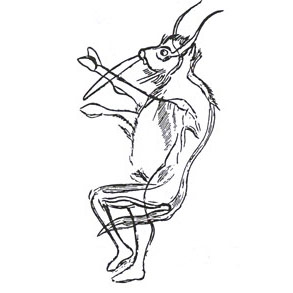
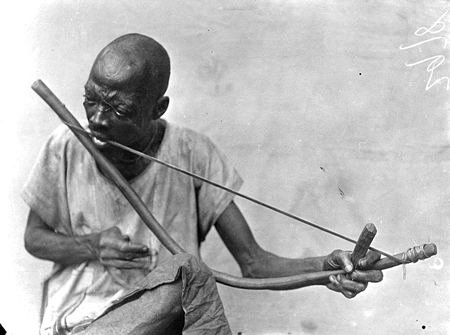
Note: I prefer the drum or rattle, both of which have now been shown to have been used by my Scottish and Scandinavian ancestors (Clive Tolley, 2016). Some may wish, rather than using a drum, to use some other instrument, such as a rattle, or a staff beaten upon the ground or floor, or even a mouth bow, such as the one shown being used by the buffalo headed dancer in the Trois Freres cave painting in France, dated to 15,000 years ago.


Related imageRelated image


Core Animist Values

These values, which I have adapted from Tom Cowan, are core values, found in many societies and practices, worldwide.


§  The animist knows all things are alive and spirit-filled, and related to her through the divine structure of creation. All things are, therefore, responsive to heartfelt prayer, petition, and pleasing.

§  The animist asks animals, plants, and natural features to help her live more respectfully of their lives and the life of the earth itself. She meets some of these fellow creatures in her dreams, visions, and daily life, and they have become friends.

§  The animist does not look “out there” for the Sacred. She finds its presence and the highest of spiritual values upon the Earth, beneath the shining stars, in the cycles of the sun, moon and seasons, in the woods behind her house, in the creeks and streams, lakes and rivers just outside, in the birds at the feeders in the backyard, in the shadowy movements in the forest.

§  The animist does what the seasons are doing and lives in harmony with each moon and season’s unique rhythms of light, weather, temperature, growth, movement, decay, stillness, and darkness.

§  The animist uses gifts from nature, such as feathers, antlers, bone, stones, branches, flowers, leaves, firelight, water, clay, soil, the wind, and shadows for spiritual work and play.

§  The animist loves the land that birthed her and nurtured her and continues to hold part of her soul, calling her to return now and then to walk it, hear its voices, and breath its many fragrances. She also knows and loves the land where she currently lives, and she honors and respects its features, wildlife, and spirits with whom she shares this land.

§  The animist stands humbly at the end of a long line of ancestors who have gone before her and without whom she would not be here. She has met some of them. They take an interest in what she is doing with her life, for it is also theirs. It is a sacred trust.

Greetings and Introduction

Greetings,


Welcome to The Gekkering Fox, the personal journal and musings of an animist.  In the coming months and years, I hope to fill this blog with information about pre-Christian European religious and spiritual practices, Indo-European religious practices, Traditional Witchcraft and Sorcery, and my personal musings and experiences practicing these philosophies, beliefs, and methods.

Welcome and Deep Peace to You,

The Gekkering Fox